
#29: Thou Shalt Submit
Plus, "The Yellow Birds" by Kevin Powers
I’m neck deep in the thesis swamp, so I thought I’d talk about something logistical for a change: submission!
Submission is essential for the aspiring writer, submission in a very specific sense. There are thousands of literary magazines out there (I too am part of one), and the aspiring writer must necessarily submit to many of them.
If you’re not a writer, you can skip this next bit. Else, here are some things I wish someone had told me years ago:
What to submit? Things you believe in. Things that feel done but not overworked.
Where to submit? Not a comprehensive list but Erika Krouse’s is a good place to start. (Caveat: it’s America-focused and fiction-forward)
When to submit? During open periods, which varies based on magazine. It helps to add calendar reminders. It usually costs a bit of change but not always.
Why submit? Thicken your skin, get your name out, see your work in print/online, eternal glory or short-lived fame…the reasons are endless.
How to keep track? This is really important so you don’t burn bridges and/or head-explode accidentally. If you’re data-driven like me you’ll use a spreadsheet (adapted from my friend R). By all means, clone it.
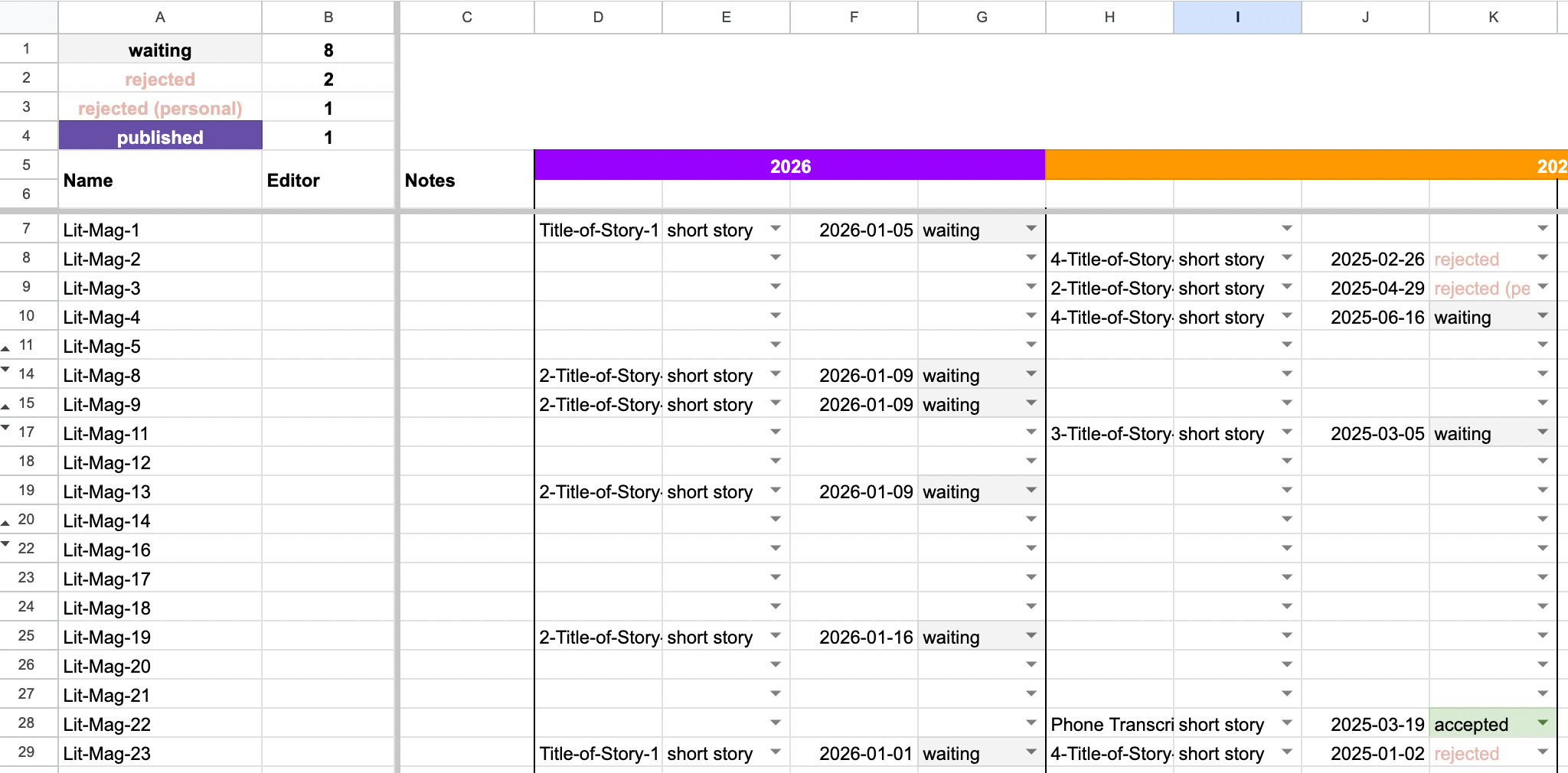
Questions? Write to me, but I may not know the answer.
Now for some stats.
I’ve been rejected 47 times in the past year, 174 times since the beginning of time. I’ve received a total of 47 “tiered” aka personal rejections, including this joyous one from the New Yorker:
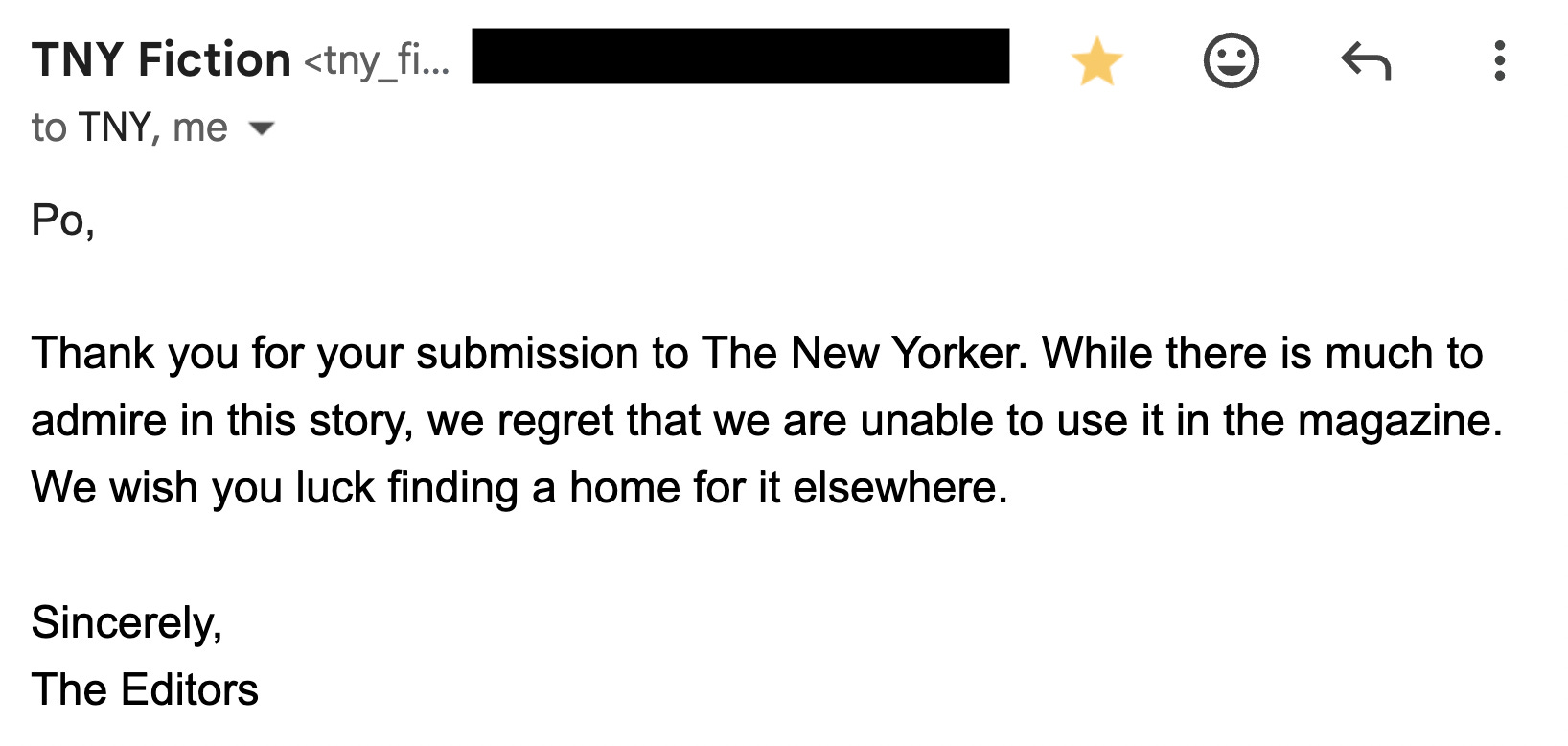
I think I snapped a vocal cord shrieking when I saw this email. I’ve revisited it about 4527984480803 times since.
Most rejections are not so emotional, I’ll add. My friend R (same person who inspired the spreadsheet) likes to have a rejection goal—100 per year, say. I try to have a rejection goal, too. They say rejection hurts, and it does, but not a lot, not anymore, and that’s a good thing.
Book 29: “The Yellow Birds” by Kevin Powers
![The Yellow Birds: A Novel [Book]](https://substackcdn.com/image/fetch/$s_!Lmwp!,f_auto,q_auto:good,fl_progressive:steep/https%3A%2F%2Fsubstack-post-media.s3.amazonaws.com%2Fpublic%2Fimages%2F65f74224-5c91-47a3-bc37-e50d39cf0d48_1729x2600.jpeg "The Yellow Birds: A Novel [Book]")
This is a war novel that takes seriously the fact that war is bad. It is not glorious, it is dull and tedious and deadly and bad. What it does to you feels something like this:
I was an intruder, at best a visitor, and would be even in my home, in my misremembered history, until the glow of phosphorescence in the Chesapeake I had longed to swim inside again someday became a taunt against my insignificance, a cruel trick of light that had always made me think of stars. No more. I gave up longing, because I was sure that anything seen at such a scale would reveal the universe as cast aside and drowned, and if I ever floated there again, out where the level of the water reached my neck, and my feet lost contact with its muddy bottom, I might realize that to understand the world, one's place in it, is to be always at the risk of drowning.
I’m taking a class with Kevin Powers this fall. It’s been glorious.